
Inspired by
the Masters
The artists of the past are not museum pieces to me. They are painters I can still learn from — through their light, colour, atmosphere, composition and ability to turn a simple moment into a story. This collection brings together paintings in which I have looked directly at some of those artists and then taken the idea somewhere of my own.
Not copies — a conversation across time

Vermeer
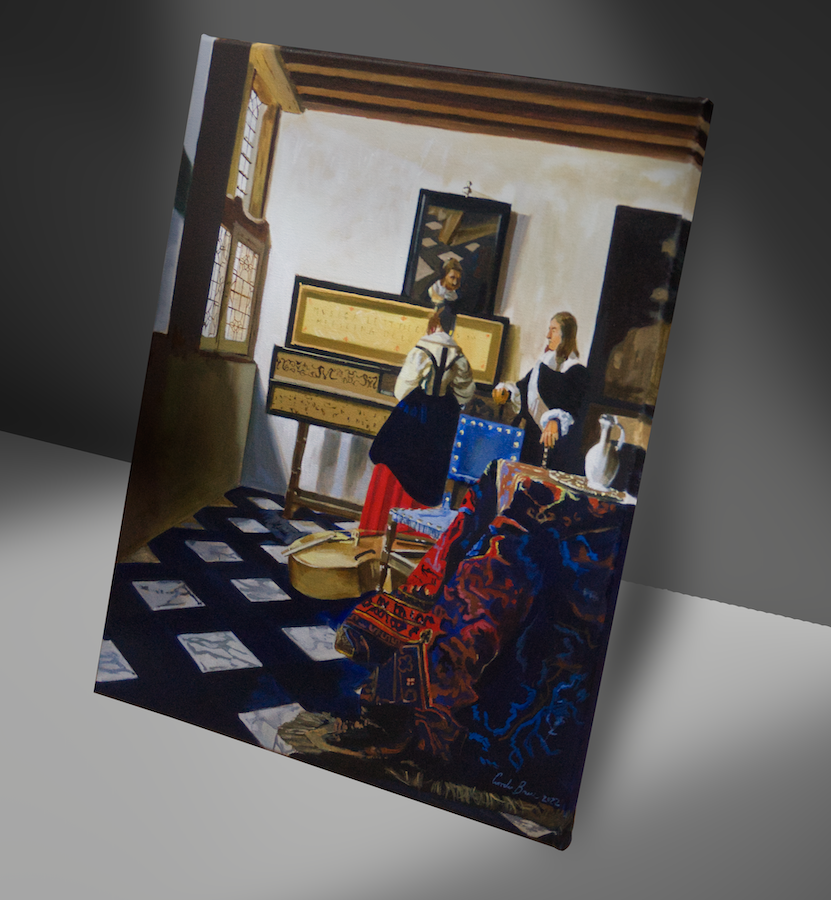
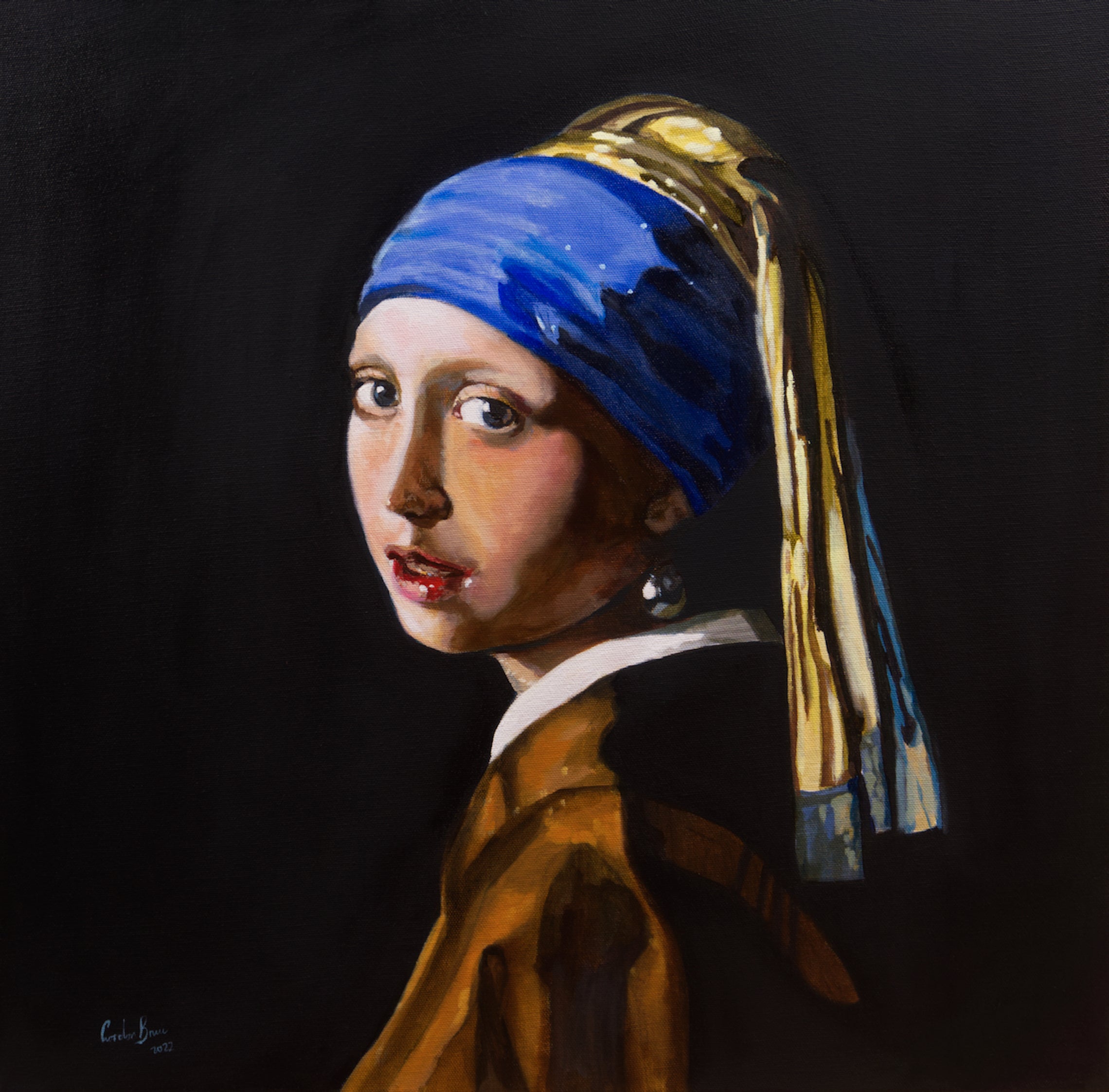
Vermeer is one of the historical painters I return to most often. His rooms are quiet, but they never feel empty. Light enters from a window, a figure pauses over music or a letter, and an ordinary interior becomes mysterious.
My Vermeer-inspired paintings range from close study to imagined scenes. In Vermeer’s New Model, I picture an encounter that never existed, while keeping the intimate light and domestic architecture associated with the Dutch masters.

Van Gogh
Van Gogh showed how colour and brushwork could carry emotion. A sky could move, a field could pulse and a room could reveal something about the person who had lived in it.
In Van Gogh Starry Studio, I did not simply revisit one of his paintings. I imagined Van Gogh himself inside a warmly lit studio beneath a swirling night sky, surrounded by references to the visual world he created.

Canaletto
Venice is one of the cities I most enjoy painting, and Canaletto is impossible to ignore when looking at its canals, façades and changing light. His paintings have extraordinary clarity, yet they are never merely architectural records.
I have revisited his Venice directly in Venice of Canaletto, changing boats, clouds and colour, and I have also pushed the idea into fantasy — turning a daylight Venetian view into a night scene with fireworks and lanterns.

Edward Hopper
Hopper’s paintings often feel like a frame from a film whose story began before we arrived. A diner, a hotel room or an illuminated window can become charged simply because of the way a figure occupies the space.
In Search of Edward Hopper brings several echoes of his urban world into one moonlit tableau. Cafés, quiet interiors, solitary figures and a yellow taxi are woven together as an imagined walk through the American night.
Lessons rather than rules
These painters are very different from one another, but the things I return to in their work also connect many of my Scottish landscapes, rainy streets, literary scenes and imagined worlds.
Using a window, streetlamp, sunset or reflected glow to give a painting its emotional centre.
Allowing colour to describe mood rather than simply copying what the eye sees.
Leaving enough unexplained that the viewer can imagine what happened before and after the scene.
Making architecture and landscape feel inhabited, remembered and personal rather than merely recorded.
Art history is still alive at the easel.
Explore the individual galleries, browse my current originals, or contact me if you have an idea for a personal painting inspired by an artist, period, place or story you love.
Follow new paintings and works in progress from my Aberdeen studio.